When a deck is getting new boards, the frame underneath matters just as much as the surface you see. Joist spacing determines how much support each board receives, and the spacing that worked for the old decking may not suit the new material or layout. If the joists are too far apart, boards may flex or the project may need framing changes before installation. This blog covers how joist spacing affects board support, what Trex & Timber Tech recommends for common layouts, and what a contractor checks when assessing a deck for redecking.
Key Takeaways
- Joist spacing is measured from the center of one joist to the center of the next.
- New decking must follow the product’s span requirements.
- Board direction and load can change the required spacing.
- Existing framing needs inspection before it is reused.
- Inadequate spacing may require reinforcement or a different project plan.
Why Joist Spacing Matters to the Finished Surface
Deck boards span the gaps between joists, so the frame determines how often each board is supported. When joists are spaced farther apart than the decking allows, a board may flex underfoot or feel less stable. The issue may become more noticeable as people use the deck or place furniture on it. Correct spacing helps the boards perform as intended and provides suitable support along their length.
Spacing also affects where fasteners and board ends can be secured. If the layout does not provide support where the decking needs it, the installation plan may need additional framing. That’s why “how does joist spacing affect decking installation?” is an important question before new boards arrive. The spacing is part of the structure and layout, not a minor detail to sort out after installation begins.
Spacing Is Measured Center to Center
Joist spacing usually refers to the distance from the center of one joist to the center of the next. This is called “on-center” spacing, often shortened to OC. It is different from measuring the open gap between the joists, so it helps to confirm how a measurement is being described when reviewing a deck plan or product instructions.
That measurement matters because decking span guidance is written around the distance between joist centers. A frame that appears to have a certain amount of open space may have a different on-center measurement once the joist width is included. During a redecking assessment, a contractor checks the actual layout and compares it with the new board’s installation requirements.
How Far Apart Should Deck Joists Be for Composite Decking?
There isn’t one spacing value that applies to every composite board and every installation. For many standard residential layouts, manufacturers specify joists at 16 inches OC or closer when boards run perpendicular to the joists. Trex’s and TimberTech’s guidance for common one-inch boards also uses 16 inches OC for residential applications, but the allowed spacing can vary based on the board profile, load, and installation pattern.
That means the right answer to “how far apart should deck joists be for composite decking?” starts with the exact product being installed. A thicker or differently profiled board may have different span requirements. The current installation guide for the selected decking should be checked before deciding whether the existing frame is suitable.
Board Direction Can Change the Spacing
Deck boards installed perpendicular to the joists span directly from one support to the next. If boards are installed diagonally, each board crosses the joists at an angle, which changes the distance it spans between supports. Trex guidance calls for closer spacing for angled installations than for a standard perpendicular layout; the exact requirement depends on the angle and board instructions.
Patterns such as diagonal layouts or other design details can therefore affect the framing plan. A deck that met the spacing needs of its original boards may need additional support for a new layout. This should be considered early, especially if the homeowner wants a different board direction as part of the redecking project. The finished design and the framing plan need to work together.
What Changes When the Old Boards Come Off?
Redecking is an opportunity to inspect the frame that will support the new surface. Removing the old deck boards can reveal joist spacing, damage, or previous repairs that were difficult to see. A contractor can then compare the existing frame with the new decking’s requirements and identify areas that may need attention before installation.
The assessment can also help determine whether redecking is appropriate or whether a larger rebuild is needed. The deck’s overall condition, layout, and structural integrity all matter, not spacing alone. The distinction between re-decking and replacing a deck depends on whether the existing structure is suitable for reuse.
How to Determine Deck Joist Spacing for Redecking

The first step is to identify the decking product and the direction in which the new boards will run. The spacing can then be compared with the manufacturer’s current installation guidance for that board, its profile, and the intended application. The inspection should also consider whether the joists are level, sound, and properly connected to the rest of the frame.
If you’re wondering how to determine deck joist spacing for redecking, the frame needs to be measured and assessed as part of project planning. The inspection includes the spacing and the condition of the joists, beams, ledger, and supporting connections. These are among the factors that determine whether an existing deck is suitable for composite resurfacing.
What If the Joists Are Too Far Apart?
If the existing joists exceed the spacing allowed for the selected decking, the new boards may not receive the support they require. Depending on the deck’s design and condition, the framing plan may need additional joists or other reinforcement. The appropriate solution depends on how the existing structure is built and what the decking manufacturer allows.
It is better to identify this before installation than to assume the old spacing will work because the previous deck felt stable. The original boards may have had different span requirements, or the deck may have been built to an older plan. Any framing changes should be evaluated as part of the full structure so the new support integrates properly with the existing frame.
Board Support Depends on More Than Spacing
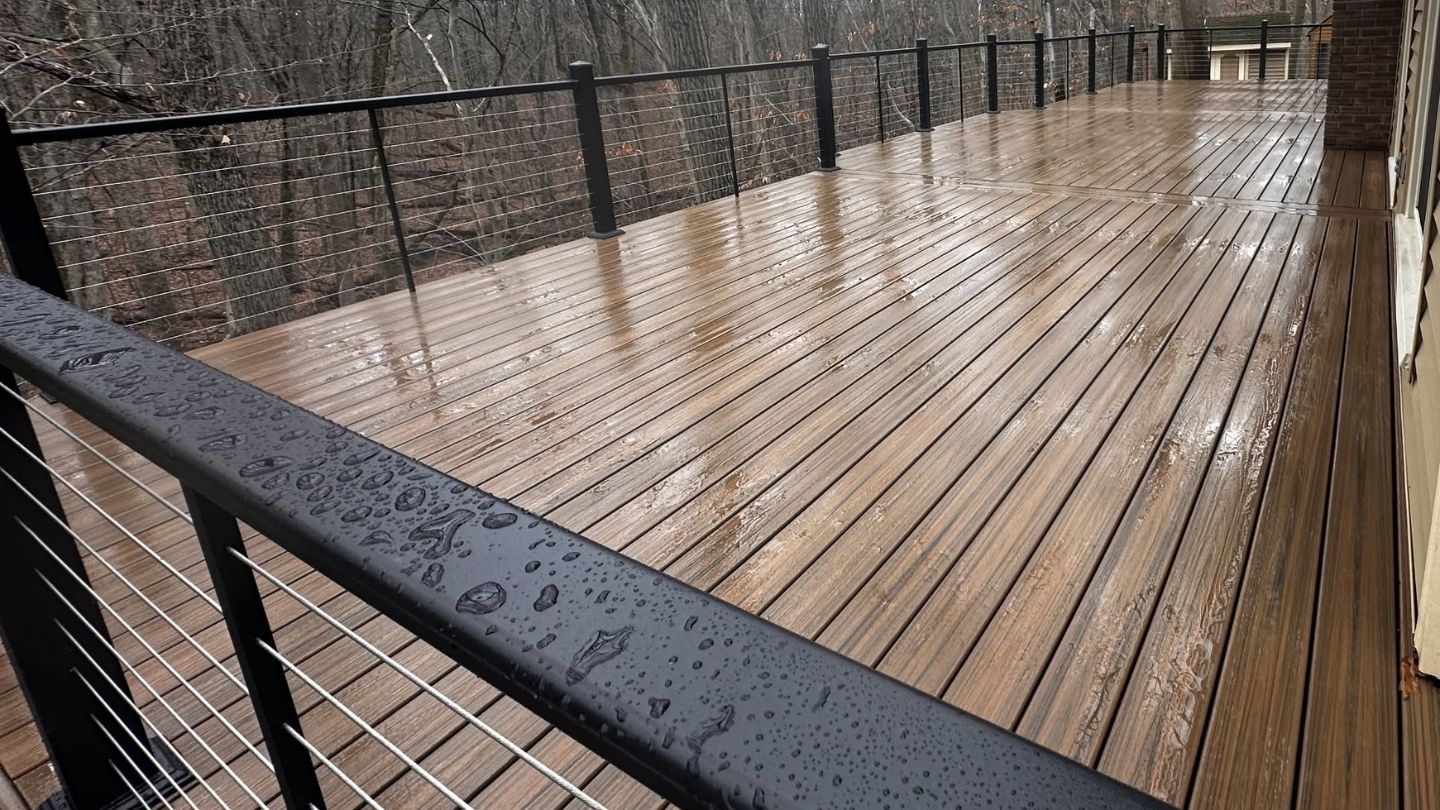
Joist spacing is a key factor, but it is not the only one that affects support. The condition and size of the joists, their span, the connections, and the overall deck framing also matter. A closely spaced frame with damaged or poorly connected joists still needs attention. Likewise, the structure must be suitable for the intended use and any relevant local requirements.
A redecking assessment should therefore look beyond a single measurement. It should identify whether the frame is sound and whether the new decking can be installed according to its specifications. Problems with layout or support can affect the finished surface, which is one reason common deck construction mistakes involving framing and support are worth considering during project planning.
Choosing Materials and Planning the Frame Together
The decking material and the structure beneath it should be considered as one system. A product’s thickness, profile, span limits, fastening method, and installation pattern all influence what the frame needs to provide. Choosing the boards first and postponing the framing review can make it harder to plan a suitable layout.
The same is true when comparing materials. Different products may have different installation requirements, and those details can affect whether an existing deck can be reused as-is. Material selection and framing requirements are connected considerations when choosing materials for a durable deck installation.
Questions to Ask Before Redecking Begins
Before work starts, ask which decking product and board direction are planned, what joist spacing that product requires, and whether the current frame meets those requirements. It can also help to ask how the condition of the joists and their connections will be evaluated, and what framing changes may be needed if the spacing does not work.
These questions make the project scope clearer before the old boards are removed. They also help ensure that the design, material selection, and framing plan are considered together. Trex publishes installation guidance for its products, and local requirements may also apply, so the project team should confirm the current specifications for the selected decking before installation.
A Strong Frame for the New Deck Surface
Joist spacing affects how well new decking is supported, but the right measurement depends on the product, board direction, loading, and overall framing condition. A careful assessment before redecking can identify whether the existing joists are suitable or whether the frame needs changes to support the new surface.
Woodland Deck Company offers redecking for suitable existing structures. If the project calls for broader updates, custom deck remodeling may be worth discussing. The finished design could also include pergolas and shade structures or deck lights. Homeowners looking for deck builders in Delaware can contact us to discuss the existing frame, decking options, and project goals.