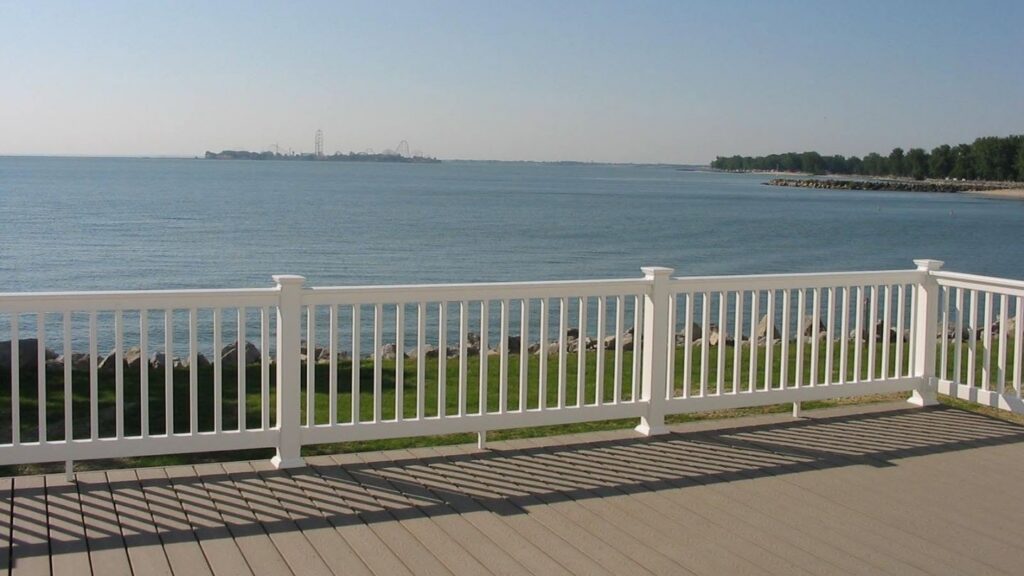
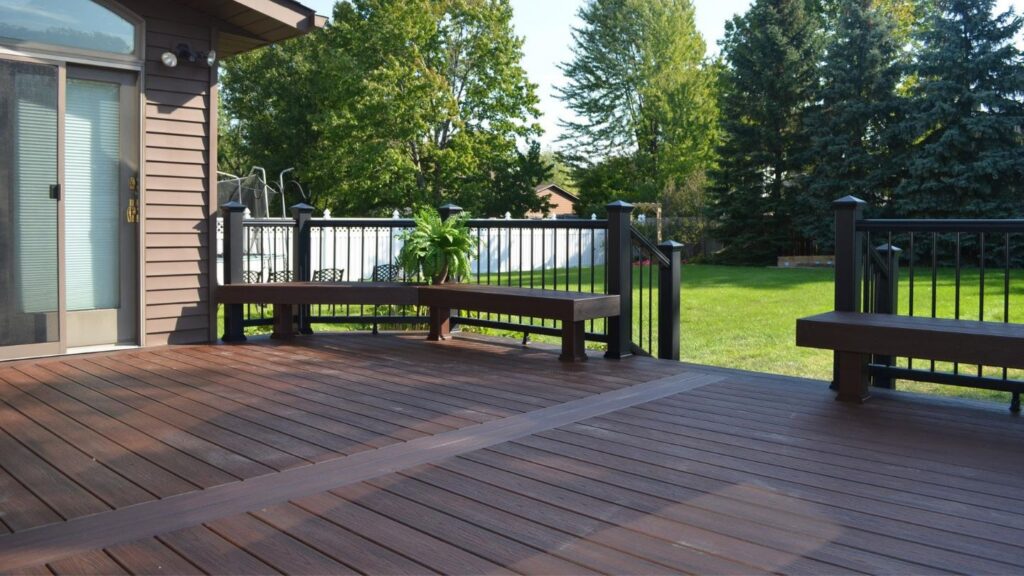
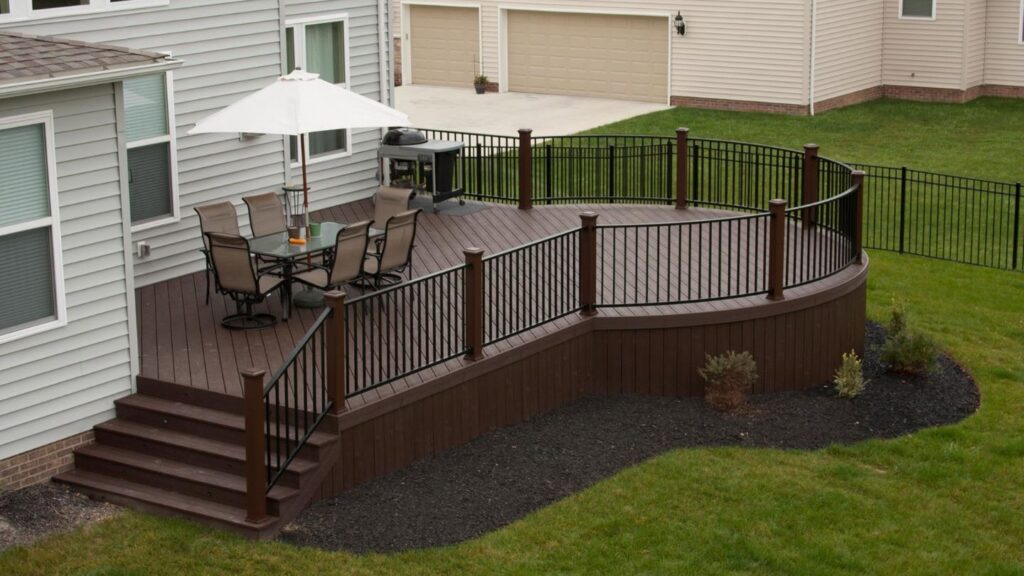
Pick out a decking color, settle on a layout, and somewhere in the ordering process a question arrives that most homeowners have never considered: grooved or ungrooved boards? It sounds like a detail for the crew to sort out, but the answer shapes how the finished surface looks, how the boards are fastened, and which parts of the deck each type can be used on. This blog covers what separates the two, where each one belongs, and why nearly every deck ends up using both.
Key Takeaways
- Grooved boards have channels along their edges that accept hidden fasteners.
- Ungrooved boards have solid square edges and are fastened through the face.
- Hidden fastening gives the main deck surface a clean, screw-free appearance.
- Ungrooved boards handle borders, stair treads, fascia, and exposed edges.
- Most finished decks combine the two, which is why board counts are planned up front.
The Difference Comes Down to the Edge
Grooved composite boards are manufactured with a continuous channel running along both long edges. That channel exists for one reason: it gives a hidden fastener something to grip. Clips sit in the groove between adjacent boards, fasten down into the joist below, and hold everything in place from underneath the surface. Ungrooved boards skip the channel entirely and present a solid, square edge on all four sides.
Everything else about the two is typically identical. Same material, same color options, same thickness, same surface texture, same performance over the years. Homeowners researching the difference between grooved and ungrooved composite decking sometimes expect a quality distinction, but the edge profile is a fastening and finishing decision rather than a statement about how long the deck will last.
Why Hidden Fasteners Changed Deck Surfaces
Face screwing a deck leaves two visible fastener heads at every joist crossing, which adds up to hundreds of small interruptions across a finished surface. Hidden fastening removes them. The result is an uninterrupted field of decking where the eye follows the boards and the color rather than a grid of screw heads, and it is the single biggest reason grooved boards became standard for the main surface. It ranks among the benefits of composite decking that homeowners notice immediately once the deck is finished.
Hidden clips do more than look tidy. They set consistent spacing between every board automatically, which keeps gaps uniform across the whole deck and allows for the natural expansion and contraction that comes with temperature swings. Nothing penetrates the top surface either, so there are no fastener heads to catch on bare feet or collect debris in the recesses around them.
Where Ungrooved Boards Do the Work
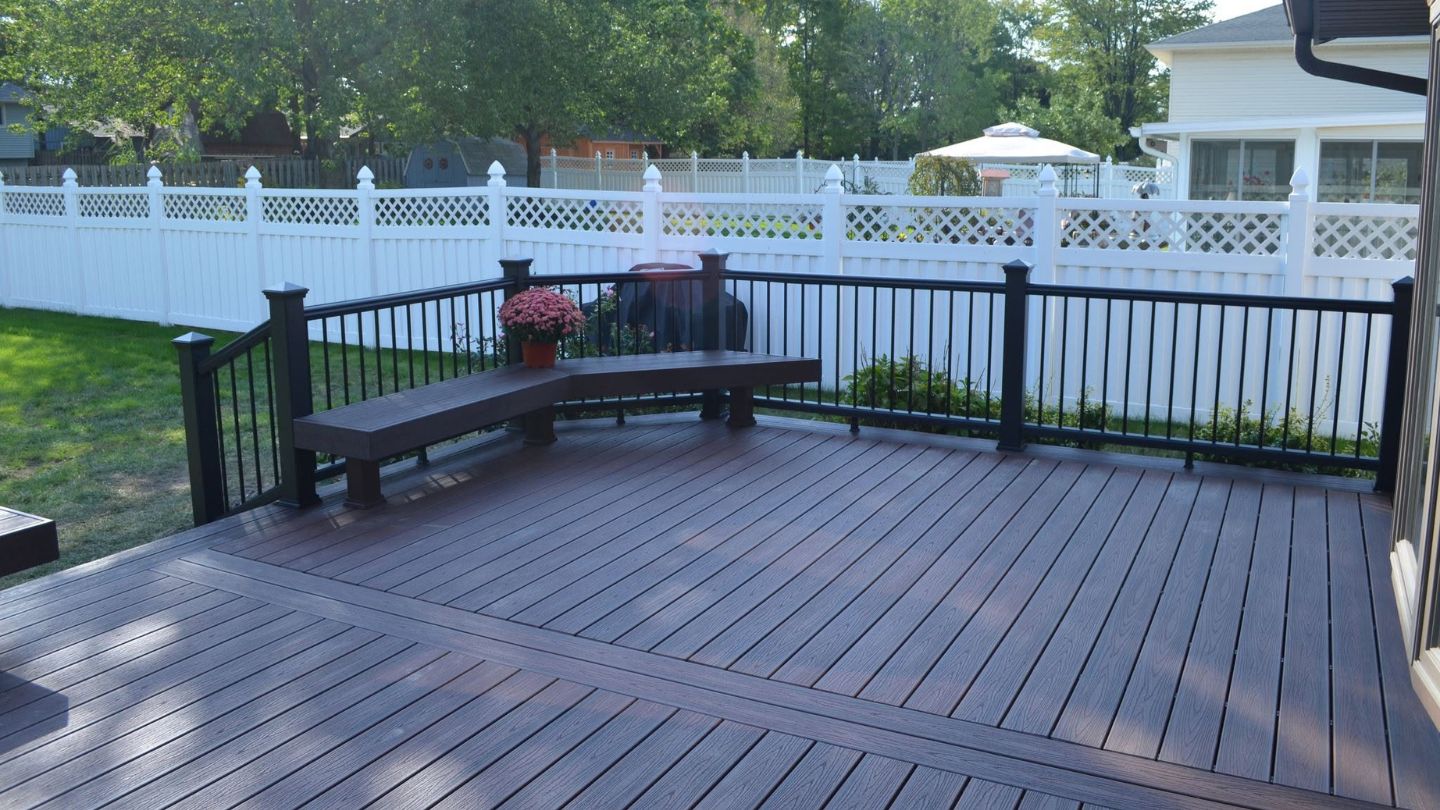
The moment a board edge becomes visible, grooved profiles stop being the right choice. A groove running along an exposed edge reads as an unfinished channel, so ungrooved boards handle every location where an edge shows. That includes the outer perimeter of the deck, picture frame borders, stair treads, fascia boards covering the rim joist, and any place where a cut edge would otherwise be on display.
Ungrooved boards are also the answer wherever there is no adjacent board to hold a clip. Single-width applications, narrow transitions, bench tops, planter caps, and tight areas around posts all rely on face fastening because the hidden system needs a neighbor on at least one side. Grooved and ungrooved composite decking end up working together on the same project rather than competing for the job.
Finishing Visible Edges Cleanly
Good builders treat exposed edges as a design element rather than a leftover. Ungrooved perimeter boards conceal the cut ends of the field boards running into them, fascia hides the framing below, and stair treads get a solid front edge that holds up to constant traffic. When a border is done in a contrasting color, those ungrooved boards also become the frame that defines the whole deck.
Stair treads deserve particular attention, since they take more wear than any other surface on a deck. Solid edges hold up better to the repeated scuffing that stairs receive, and they give the tread a substantial look from the side rather than exposing a hollow channel at eye level as you approach. On wider stairs, the way the treads are detailed at their outer ends often determines whether the whole run looks custom-built or merely assembled.
Color and Texture Stay Consistent Across Both
One concern that comes up regularly is whether the two profiles will match once they sit side by side. Within the same product line and color, they do. Both are manufactured from identical material with the same surface embossing, so a grooved field board and an ungrooved border board in the same shade read as one continuous surface. The only visual difference is the edge, and that edge is almost always hidden or intentionally exposed as part of the design.
Differences can appear across production runs or between product lines, which is why builders order all the material for a project together rather than topping up later. Composite colors carry slight natural variation by design, since that variation is what keeps a large surface from looking uniform and synthetic, and ordering as a single batch keeps that variation within the range the manufacturer intended.
Planning the Mix Before Material Arrives
Because a typical deck uses both profiles, the board counts have to be worked out from the actual layout rather than from total square footage. Field area determines the grooved quantity, while perimeter length, stair count, fascia runs, and any built-in features determine the ungrooved. Getting that split wrong means either a delay waiting on a reorder or a pile of expensive boards that will never be used.
This is also where design and ordering intersect. Picture frame borders, direction changes, and inlay patterns all shift the ratio between the two profiles, sometimes substantially. Settling on the pattern before the order goes in is part of choosing the right composite decking for a project, and it keeps the installation moving without improvised adjustments on site.
How Fastening Affects Installation and Repairs
One common misconception is that hidden fastening systems take longer to install than traditional face screws. With today’s advanced fastening technology, installation times are generally comparable. Hidden fasteners provide a clean, seamless appearance without visible screws, giving homeowners a more polished and professional-looking deck surface without adding significant installation time.
Board replacement is another area where hidden fastening technology has come a long way. Older systems often required removing multiple surrounding boards to replace a single damaged board. At Woodland Deck Company, we use the latest hidden fastening technology that allows individual deck boards to be easily removed and replaced without dismantling large sections of the deck. This gives homeowners the best of both worlds: the clean appearance of hidden fasteners and the convenience of easy maintenance and repairs
Choosing Boards Alongside Everything Else
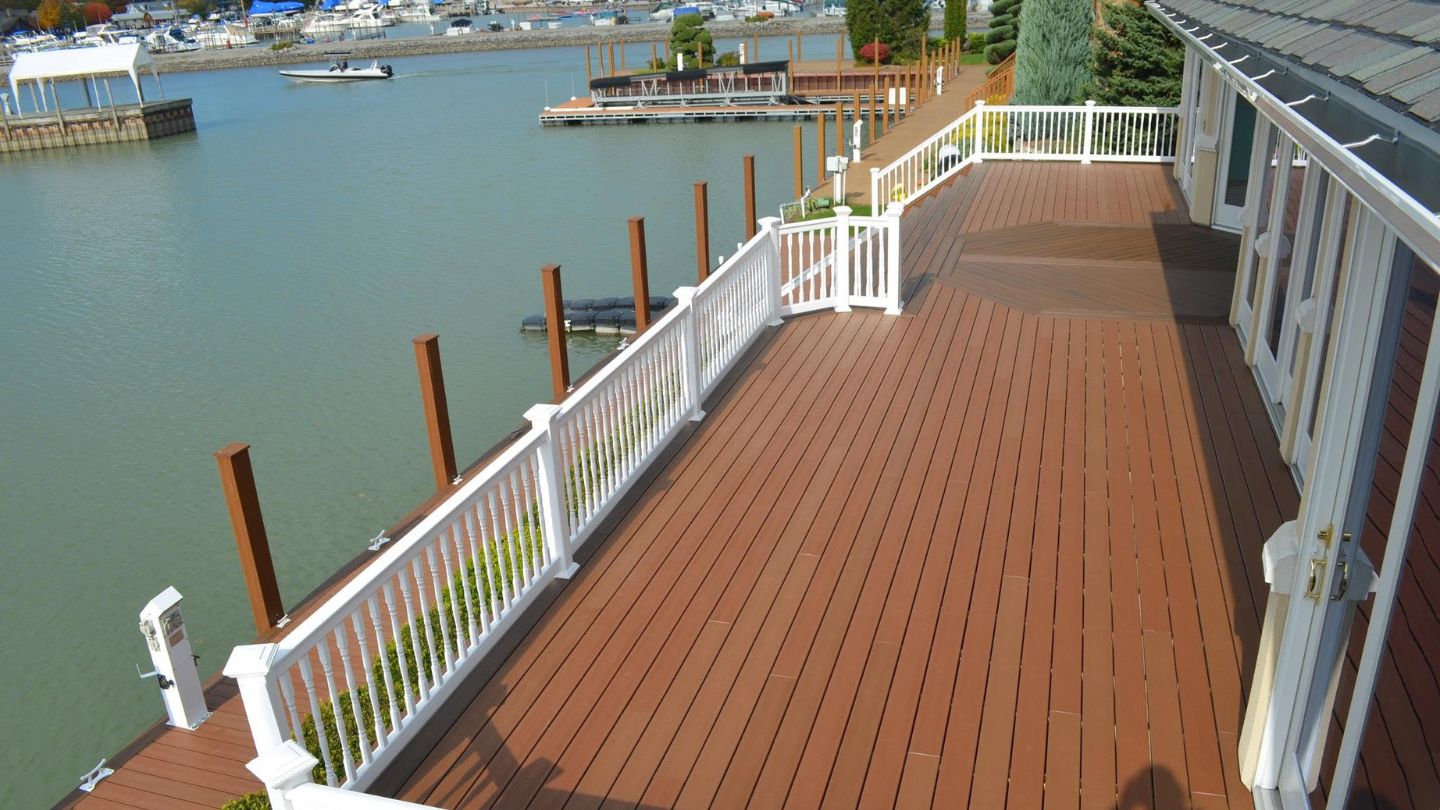
Understanding the difference between grooved and ungrooved composite decking matters most when it is part of a larger set of decisions rather than an isolated one. Board profile connects directly to layout, color pairings, border design, railing selection, and the product line itself. Homeowners weighing brands often compare Trex and Azek/TimberTech at the same time, since profile and color availability vary between product lines.
The practical approach is to settle the look first and let the board types follow. Decide where the field runs, whether a border frames it, how the stairs are detailed, and what the perimeter should look like from the yard. Once those answers exist, the grooved and ungrooved split essentially determines itself, and the material order reflects a plan rather than an estimate.
Building a Surface That Looks Finished From Every Angle
Grooved and ungrooved boards are not competing options so much as two parts of the same system. Grooved profiles give the main surface its clean, fastener-free appearance and consistent spacing. Ungrooved profiles finish every edge that shows, from borders and stair treads to fascia and built-in features. A deck that looks polished from the yard and from the seat you use most is almost always using both, placed deliberately.
If you are planning a project and want a deck builder in Northeast Ohio, Columbus, or Pittsburg to help sort through the material details, Woodland Deck Company is glad to walk you through them. Our team handles custom deck remodeling and redecking, builds pergolas and shade structures, and installs deck lights that highlight borders and stairs once the sun goes down. Contact us with your plans, and we will help you get the specifications right before the first board is ordered.