Most backyards have one spot that everyone gravitates toward, and one spot that nobody uses after eleven in the morning. Usually it comes down to sun. A patio cover changes that equation entirely, turning an exposed slab into somewhere you can eat, work, or simply sit for hours without thinking about it. The options have grown well beyond a basic roof overhead. This blog covers the designs worth considering, how each one handles light and weather, and the details that decide whether the finished space actually gets used.
Key Takeaways
- Solid covers block sun and rain outright, while open designs filter light for a softer effect.
- Louvered and retractable systems let you adjust coverage as the day changes.
- Ceiling height and airflow affect comfort as much as the roof itself does.
- Lighting, fans, and screens turn a covered patio into a space used morning to evening.
- Matching the cover to your rooflines and materials keeps it looking original to the home.
Why Shade Changes How a Backyard Functions
An uncovered patio or deck is a seasonal, hourly proposition. It works in the morning, bakes by noon, and empties the moment clouds roll in. Adding a roof removes those limits, and the effect on a household’s routine is immediate. Meals move outside more often, furniture stops getting weathered and faded, and the space starts functioning like an extra room rather than a surface you walk across on the way to the yard.
There is a comfort factor beyond sun protection as well. Overhead structures moderate glare, cut down on heat radiating off hard surfaces, and shelter electronics, cushions, and dining furniture from the worst of the weather. Homeowners comparing patio cover ideas often start by thinking about appearance, then quickly realize the practical gains are what justify the project.
Solid Roof Covers for Full Protection
A solid roof is the most straightforward approach and still the most popular. It blocks sun and rain completely, which means the furniture stays dry and the space remains usable through a sudden afternoon storm. Solid covers also create the most definitive sense of an outdoor room, with a clear ceiling line that makes the area feel enclosed and intentional rather than simply shaded.
The tradeoff is light. A solid roof casts a real shadow, and on a patio tucked against the back of the house, that shadow can reach into the kitchen or family room. Designers work around this with higher ceilings, skylight panels, or by setting the structure slightly away from the wall so daylight still reaches the windows. Many homeowners begin by researching the difference between a pergola and a patio cover, since solid and open designs produce very different results from the same footprint.
Open Designs That Filter Rather Than Block
Pergolas and open rafter structures take the opposite approach. Instead of stopping sunlight, they break it into strips that shift across the patio through the day. The effect is softer, the space stays bright, and adjacent interior rooms keep most of their natural light. Rafter spacing controls how much shade you get, so the same structure can read as lightly dappled or genuinely shady depending on how it is built.
Open designs also give you somewhere to hang things. String lights, planters, fans, and climbing vines all attach naturally to an exposed frame, which makes the structure feel lived in rather than purely architectural. For patios that already get afternoon shade from the house or mature trees, an open design often delivers all the relief that is actually needed.
Adjustable and Louvered Systems
Louvered roofs sit between the two approaches and solve the problem of changing conditions. The slats rotate open for light and airflow, then close into a sealed surface when rain starts. For households that use their patio across the whole season and in varied weather, the flexibility is worth the added complexity. Retractable canopies achieve something similar at a different price point and scale.
Covered Patio Ideas That Suit Different Yards
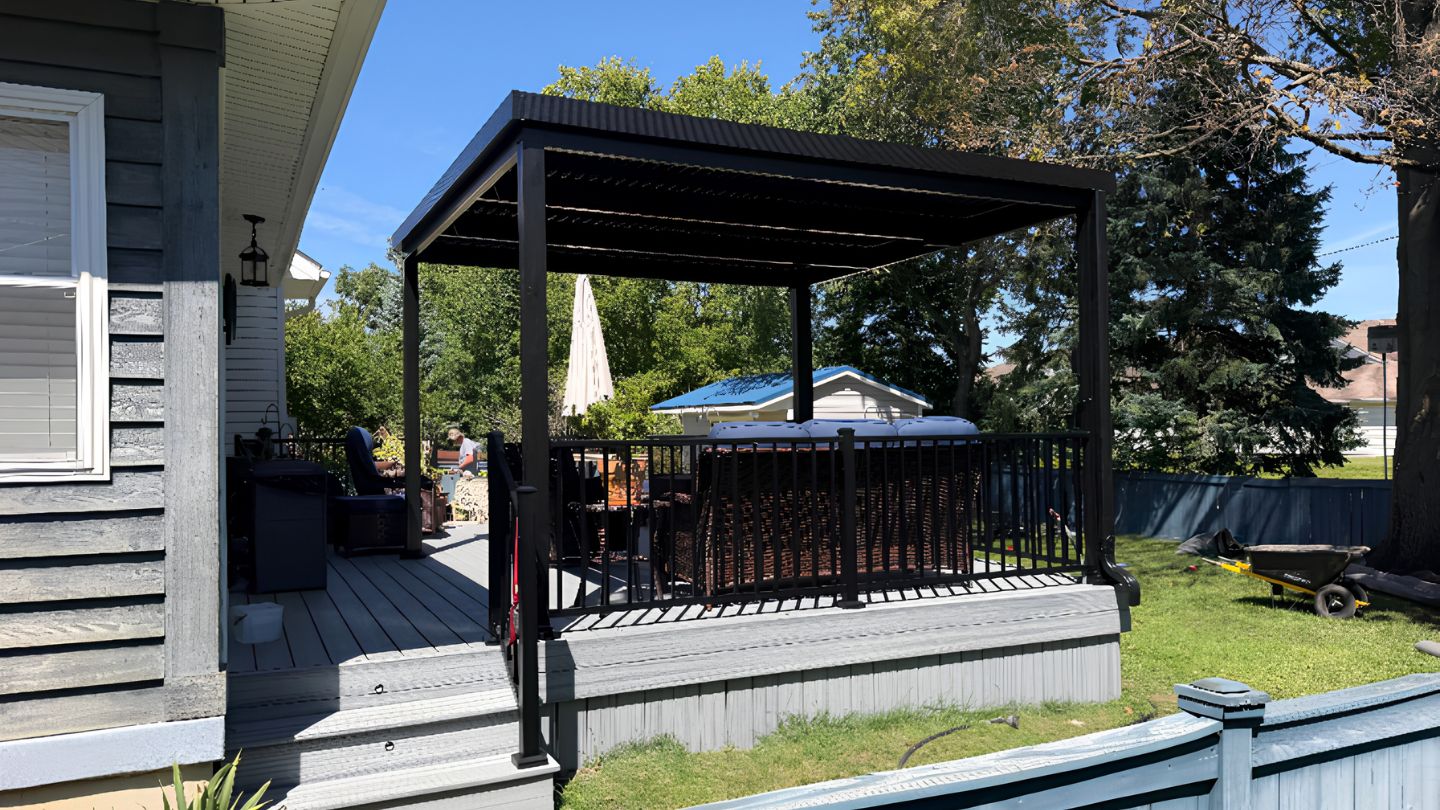
The best covered patio ideas account for where the space sits and how it connects to the rest of the property. A patio directly off the kitchen benefits from a cover attached to the house, since the convenience of stepping straight into shade drives daily use. A seating area out near a garden or fire feature usually works better with a freestanding structure placed exactly where the view and the breeze are best.
Most patio covering ideas also have to account for what is already in the yard. Existing trees, fence lines, a pool surround, or a grade that falls away from the house all narrow the field quickly, and working with those constraints usually produces a better result than designing around them. A cover that follows the shape of the space it serves looks settled in a way that a generic rectangle dropped into a corner never quite manages.
Size deserves more thought than it typically gets. A cover that stops short of the furniture leaves half the table in the sun by late afternoon, which defeats the purpose. Mapping out the dining set, lounge chairs, and circulation paths before the structure is designed is the simplest way to avoid that outcome, and it usually reveals that the right footprint is slightly larger than first imagined.
Materials, Colors, and Matching the House
A patio cover succeeds visually when it looks like it was always there. That means picking up on the home’s existing roof pitch, column proportions, trim details, and color palette rather than treating the structure as a standalone object. Composite and aluminum framing both offer low upkeep and consistent appearance over the years, which matters for something that sits in full view of the back of the house.
Ceiling treatment is an easy detail to overlook and a satisfying one to get right. A finished ceiling with recessed lighting feels polished and room-like, while exposed rafters keep things relaxed and let you see the structure doing its job. Both work. The choice usually follows whether the rest of the home leans formal or casual, and whether the patio is meant to feel like an extension of the interior or a step away from it.
Lighting, Fans, and Evening Comfort
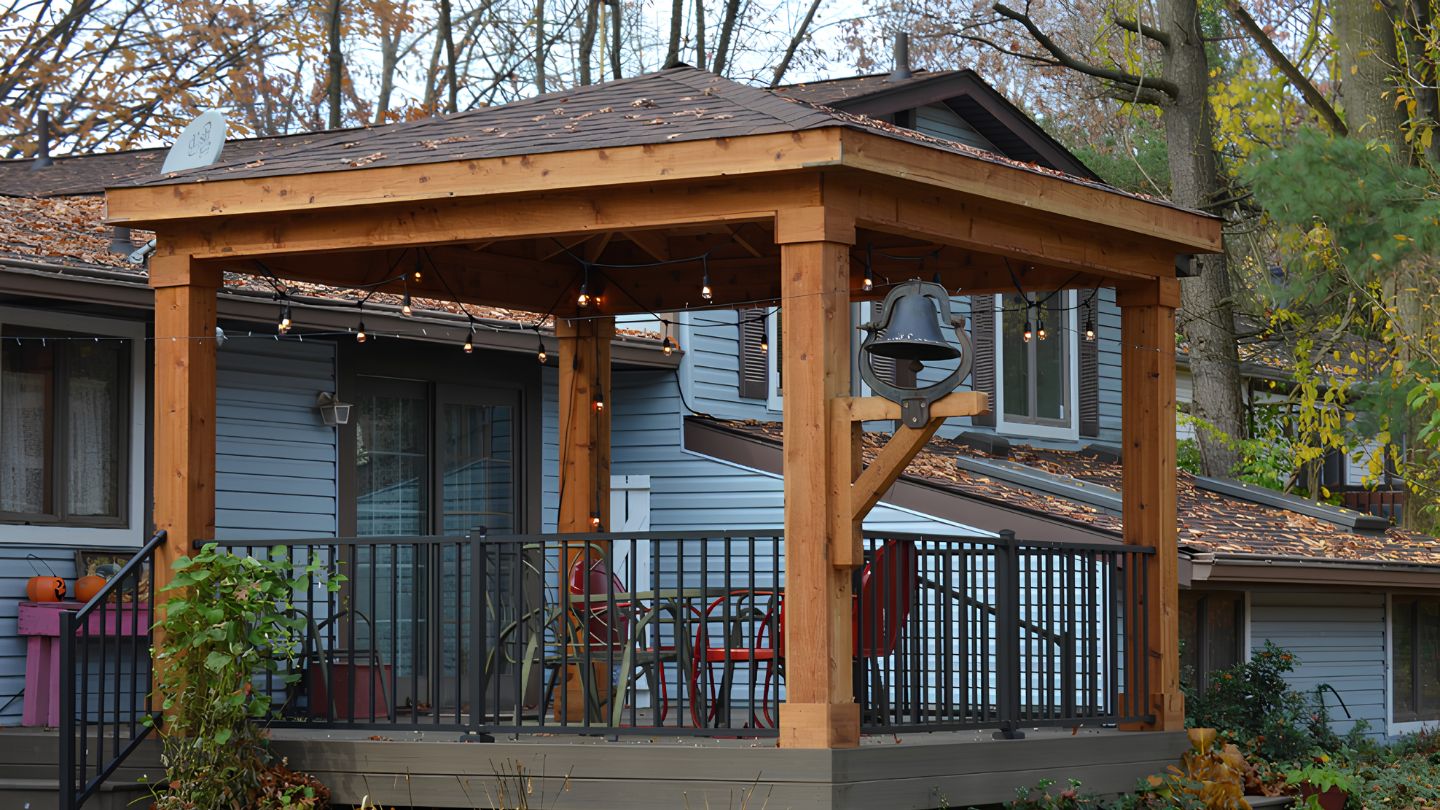
Shade handles the afternoon. Lighting handles everything after. Fixtures integrated into the ceiling, posts, and surrounding steps extend the usable hours well past sunset without the harsh pool of light a single floodlight produces. Ceiling fans make a surprising difference on still evenings, moving enough air to keep the space comfortable and insects less interested in joining dinner.
Heaters, screens, and privacy panels push the season further at both ends. A covered patio with overhead heat stays comfortable into October in Central Ohio, and retractable screens on one or two sides cut wind without closing the space in. These additions are far simpler to plan during construction, when wiring and mounting points can be built into the frame instead of added to the surface later.
Narrowing Down Your Patio Cover Options
Sorting through patio cover options gets easier when the question shifts from what looks good to how the space will be used. Someone who wants to eat outside regardless of the forecast needs a solid roof. Someone who mainly wants relief from midday glare may be happier with an open structure that keeps the yard feeling bright. Anyone who cannot decide is usually a good candidate for a louvered system.
- The direction your patio faces and when it gets the harshest sun
- How much natural light the adjoining interior rooms need
- Whether rain protection is essential or simply nice to have
- What furniture and features need to fit underneath
Details That Separate Good Covers From Great Ones
Asking what the best patio cover ideas are tends to produce a list of styles, but the structures people love years later are defined by execution rather than category. Proper drainage that keeps water off the patio surface, post placement that does not interrupt sightlines or seating, adequate headroom so the space breathes, and clean flashing where the roof meets the house all matter more than the particular style on the drawing.
Permits, footing depth, and snow load requirements apply to permanent structures across Central Ohio, and these are worked out during design rather than discovered mid-build. An experienced contractor handles the approvals as routine, sizes the framing for local conditions, and flags anything about the property that will shape the design before you get attached to a particular layout.
Creating an Outdoor Space You Will Actually Use
The right patio cover is the one that matches how your household spends time outside. Solid roofs deliver certainty in any weather, open structures keep the yard bright and airy, and adjustable systems give you both when conditions change hour to hour. Pair the structure with thoughtful lighting, sensible proportions, and materials that echo the house, and the result stops feeling like an addition and starts feeling like part of the home.
If you are weighing custom patio covers in Columbus, Northeast Ohio, and Pittsburgh Woodland Deck Company would be glad to help you think it through. Our team designs pergolas and shade structures, installs deck lights that keep the space working after dark, and handles custom deck remodeling and redecking so everything ties together as one outdoor room. Contact us to talk through your backyard, and we will help you land on a setup that fits the way you live.